Turning a Dead-End into an Opportunity.
Dead ends in e-commerce, like out-of-stock items, can become opportunities for discovery
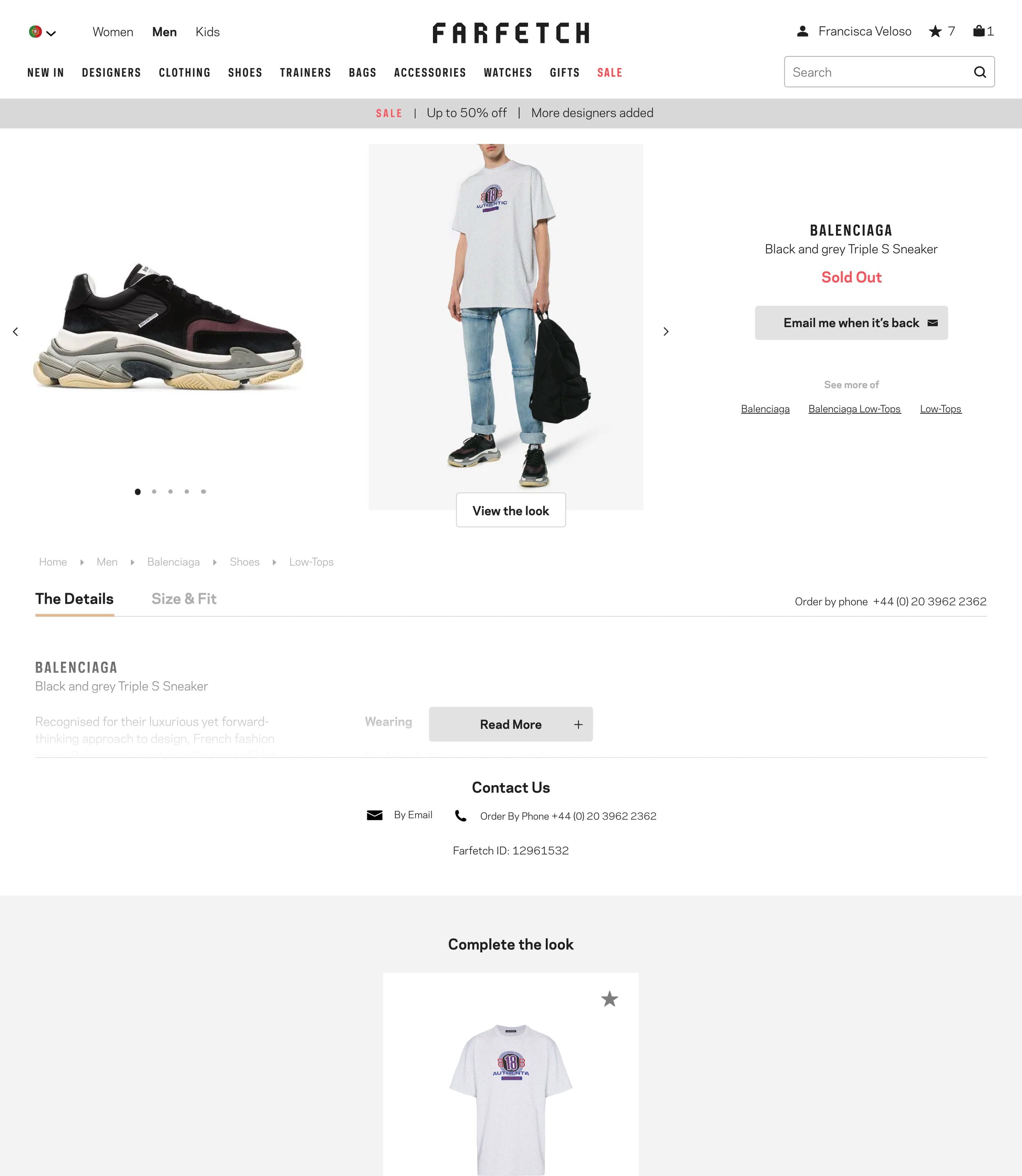
I led Acquisition & Engagement at Farfetch, focusing on a critical problem: a significant portion of users were reaching ‘dead-ends’ out-of-stock products, low-stock listings, or overwhelming catalog experiences and leaving without completing their journey.
We weren’t failing to attract users, we were failing to recover them when their intent couldn’t be fulfilled. OOS PDPs, Low stock PLPs, Overwhelming catalogs, Missing sizes and Broken journeys.

Problem:
At Farfetch, 15% of landing product detail pages are for out-of-stock items, leading many users to abandon their session without exploring alternatives. This results in lost conversions and disengaged users, highlighting a gap in the offered experience and missed conversion opportunities. Furthermore, Out of Stock pages look very similar to In-Stock Pages.
Hypothesis:
Turning these Out-of-Stock dead-end moments into opportunities for engagement, discovery, and inspiration. A measurable impact would include reduced abandonment rate and churn rates after an Out-of-Stock page is visited, alongside increased time-on-site, as users are encouraged to explore and stay connected with the broader catalog.
Spending time in the Problem Space

After aligning on metrics and mapping the problem with the PM (image above), I asked the team to discuss the page from a first-time user’s perspective, capturing feedback on post-its during the review. We also consulted Customer Support for their insights and role-played as luxury associates informing users about out-of-stock items. These activities helped uncover key jobs-to-be-done for the next steps.
Confirm product identity - Help users quickly verify they've found their desired item, not to be confused with in-stock pages.
Communicate availability status clearly - Provide immediate, unambiguous out-of-stock messaging
Smart alternative suggestions - Present relevant options that match original specifications (color, style, size)
Jobs-to-be-done

Design and Hypothesis Testing
The first step is clear: ensuring users recognize the product they were searching for. Once that’s achieved, we can focus on opportunities. Think of it as a shopping assistant saying, "We don’t have this… but let me help!"
To explore this, we selected a few algorithms and A/B tested the least confident option:
Same product, different model or color: Not tested, as we were confident in its relevance when available.
Same brand + same category (e.g., More Mules from Burberry).
Similar pieces (e.g., Other Mules).
The goal is to deliver an experience that flows from relevance to discoverability—starting with what’s most likely to match the user’s intent and transitioning to broader options. For instance, it’s easier to infer someone wants a similar shoe than to guess they’re looking for a pink one without explicit data.

Proven Impact and Results
The rollout of smart recommendations for out-of-stock product detail pages (OOS PDPs) significantly improved user engagement and conversion metrics:
Single-Page Visits: Users encountering out-of-stock items were more likely to explore suggested alternatives, reducing drop-offs and increasing browsing behavior.
Add-to-Bag Actions & Revenue: A clear boost in Add-to-Bag actions contributed to a notable increase in GMV, backed by high-confidence testing results.
Performance of Recommendation Variants
Among the tested variants, Variant C proved most effective. By prioritizing recommendations for similar products over broader designer + category suggestions, it drove higher engagement rates and conversions:
Revenue Impact: The test drove an increase in GMV ranging from +$2.35M to +$6.76M, depending on the scenario, with a high statistical significance of 99.9%.
The instinct was to show "More from Burberry" it felt premium, on-brand, safe. But when we dug into the research, something became clear: users who landed on an out-of-stock page weren't thinking about the brand. They wanted that shoe. So we flipped the hierarchy leading with similar products ("Other Mules") rather than same-brand alternatives.
That one decision is what separated Variant C from Variant B. And it's why the GMV impact ranged from $2.35M to $6.76M depending on the scenario.

Continuous Refinement on Dead-Ends Epic
Problem:
~50% of top PLPs had less than 1 page of items
Only 0.5% of users subscribed to back-in-stock
To further enhance the experience, my team and I iterated on related features:
Hypothesis:
a) Low PDP See Similar When stock is low or size is unavailable: show similar products (A/B test showcase on options on PDP vs. PLP) Outcomes: Reduced single-page visits on low-inventory landing pages | Increased multi-page visits (deeper navigation) | Improved landing page quality, helping mitigate paid acquisition inefficiencies (Google Quality Score impact).
b) Low Stock PLPs > Designers When catalog short on a product listing page showcase related Designers | Outcomes: Didn’t reach full statistical significance before iteration paused, but consistently improved continuation behavior.
c) Offering Relevant Notifications: Back in Stock Flow on iOS with Push Notifications | Outcomes of Back in Stock: ~$13.7K revenue per day | 42% open rate | ~$8M projected yearly revenue (app opportunity) | Increased high-intent user return rate through re-engagement


