Giving every student the report card they deserve, without the hours it takes to write one
AI Reports for Teachers
The problem
Writing report cards is one of the most time-consuming things a teacher does, and one of the least supported. The data exists: sessions completed, lessons finished, projects created, challenges attempted. But turning that into something a parent actually wants to read? That's still entirely on the teacher. A blank page, a student username, and not enough time.
We wanted to help with that. Not by replacing what the teacher knows about their students, but by handling the part that was just taking too long.
The question that shaped everything: what should AI actually touch?
Before any screen was drawn, we had to ask ourselves: what do we feed the AI, and what do we leave to the teacher?
The brief started with more inputs than we ended up with. Gender, age, report tone were all on the table at some point. We removed them. Partly because we couldn't fully control for the bias they might introduce, and partly because it just didn't feel right. These are children. If AI is going to say something about a student, it should be grounded in what they actually did, not in how we've categorised them.
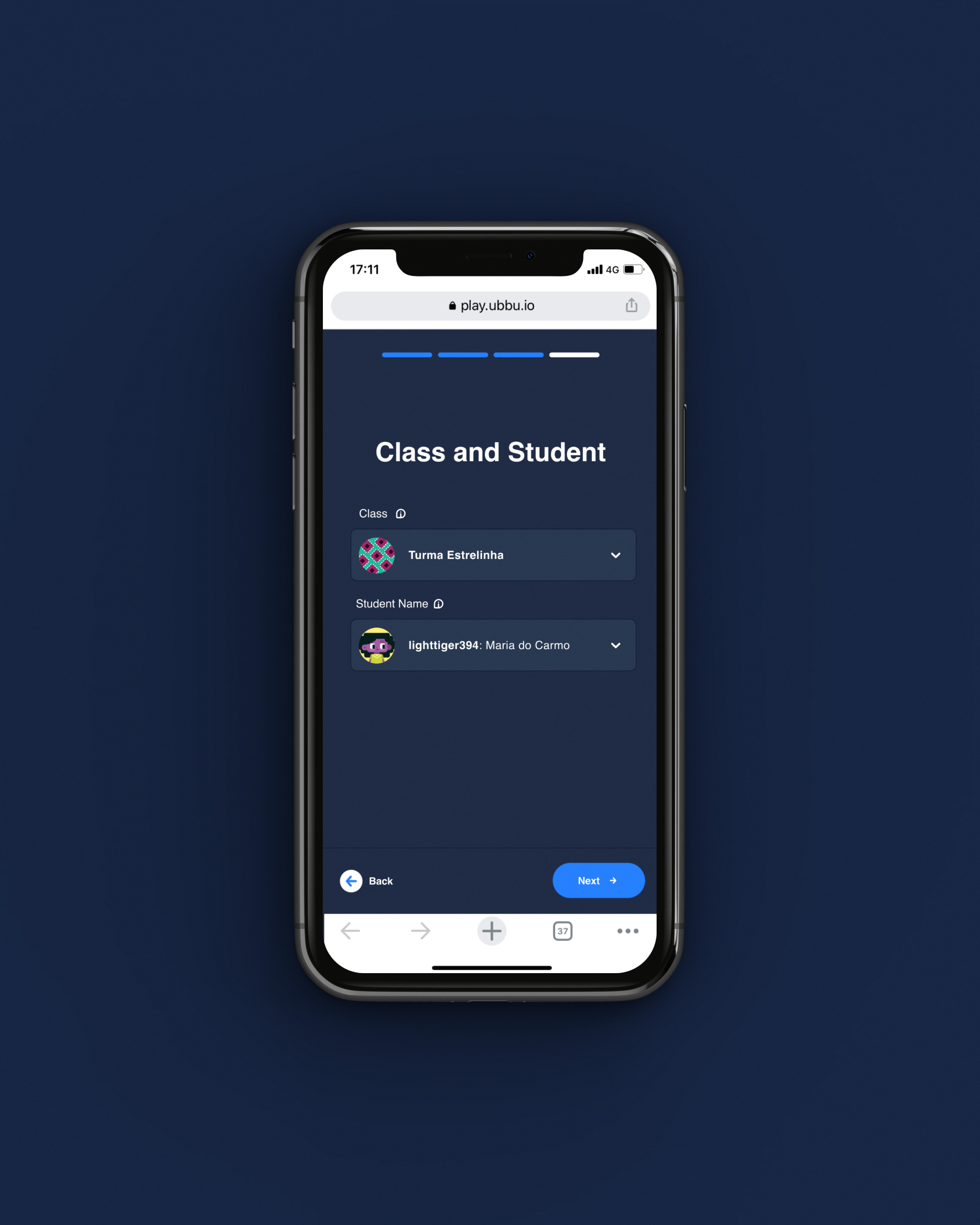
What stayed was behavioural: sessions attended, lessons and projects finished, whether they worked with classmates. Things ubbu already knew, things we could stand behind.
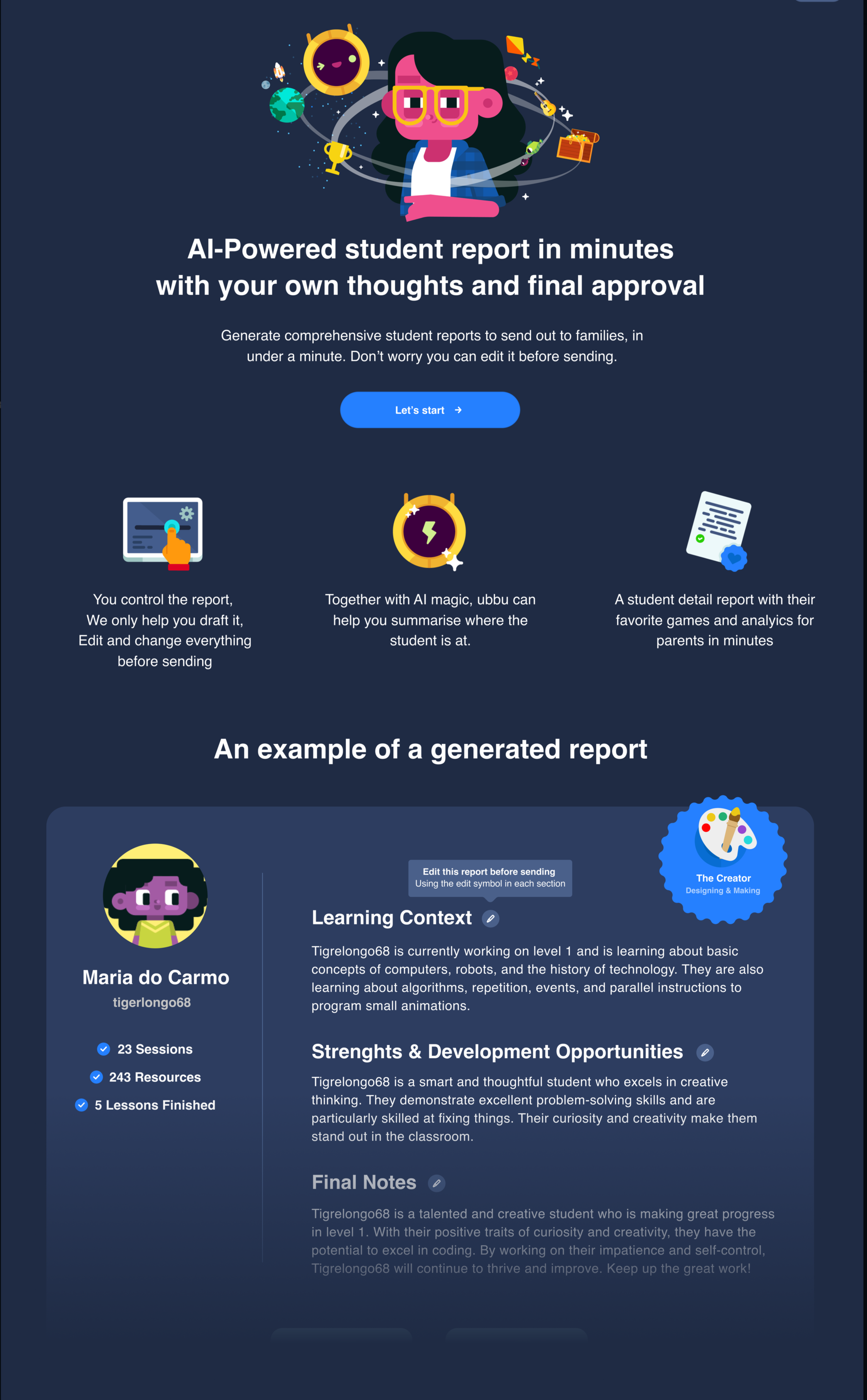
The first thing a teacher sees when they open the feature isn't a form. It's a short explanation: you control this, we just help you draft it, and you can edit everything before it goes anywhere.
That was a deliberate choice. We wanted teachers to understand the relationship before the interaction started. They're the author. The AI is helping them get there faster.
We carried that same thinking into the loading screen. While the report generates, the screen prompts: "Edit the report and make it your own." A small thing, but it mattered. We didn't want teachers to receive something and assume it was done.
Giving teachers the words, not just the space
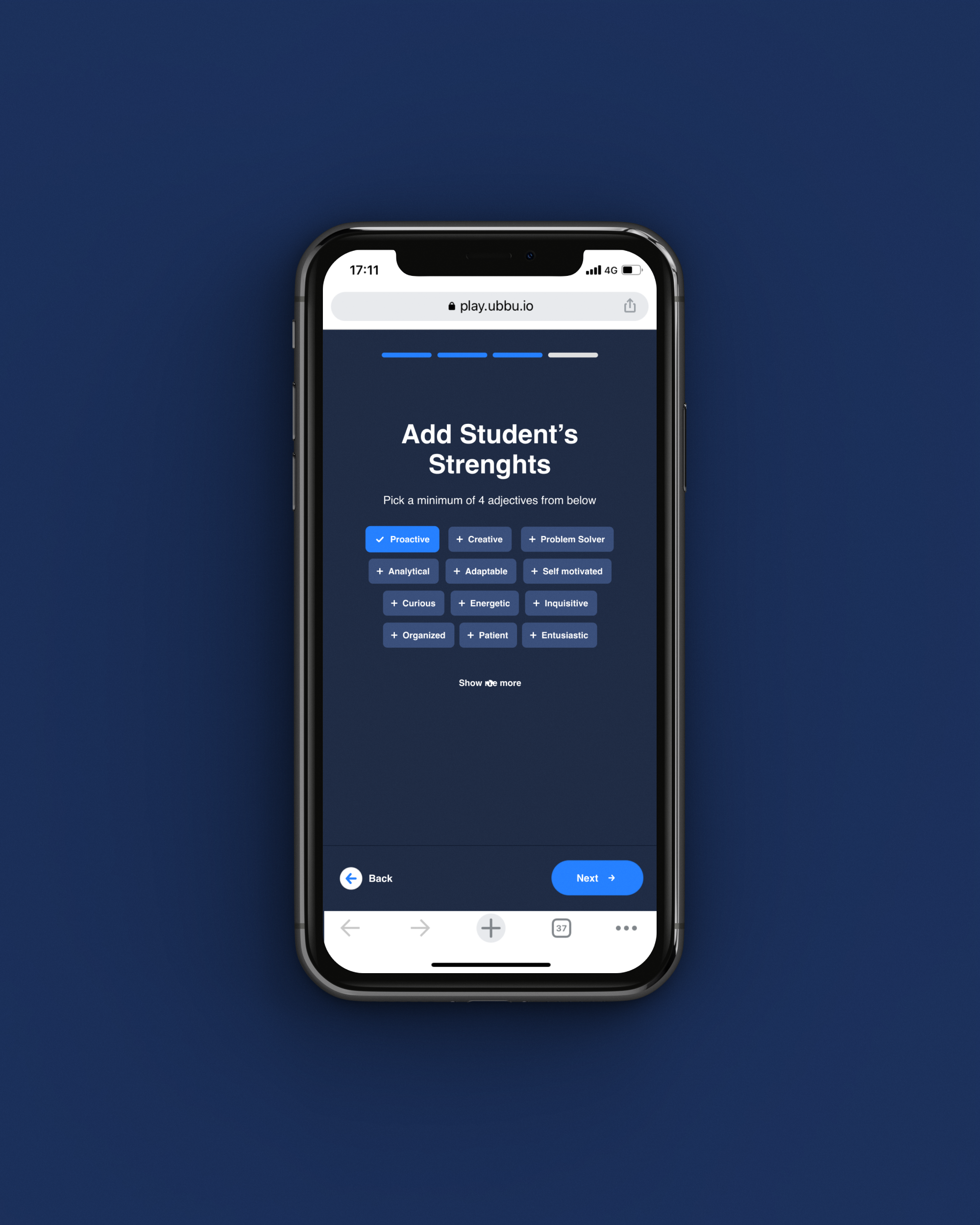
Strengths and development areas are filled in by the teacher, but not from scratch. We built a word bank: Proactive, Creative, Problem Solver, Curious, Adaptable, with a "Show me more" option for when none of them quite fit.
This came from thinking about what the AI would do with whatever we gave it. A blank text field meant unpredictable inputs and unpredictable outputs. By defining a vocabulary we'd already thought about, we made the AI's responses more consistent and easier for teachers to trust. The judgment is still theirs. We just gave it some structure.
Setting the tone
The last step belongs to the teacher
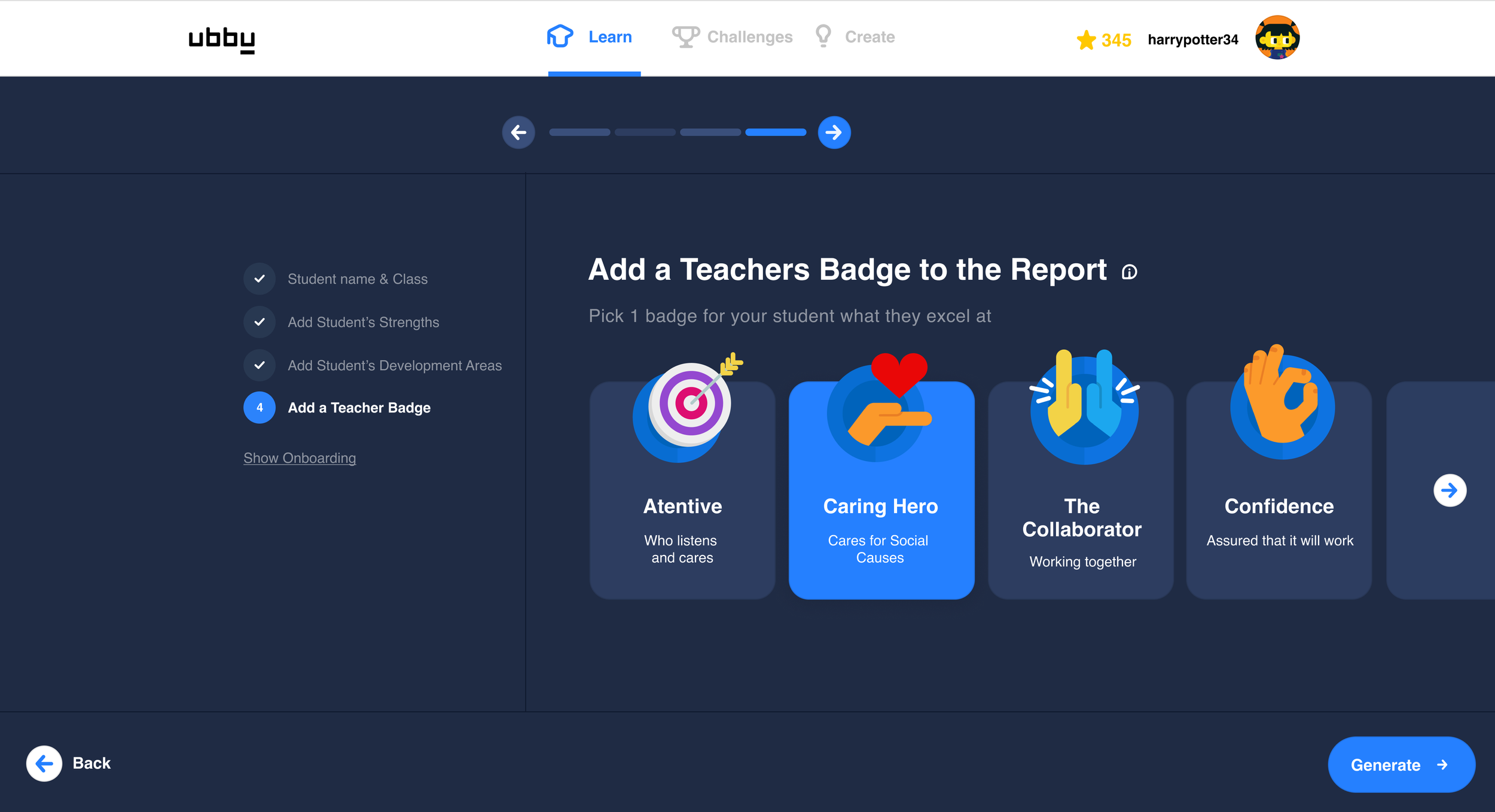
Right before generation, the teacher picks a badge for their student. Caring Hero. The Collaborator. Confidence. One badge, their choice, based on something they know about that child that no data point could tell us.
It's the one moment in the whole flow where the AI isn't involved at all. And we put it last on purpose. After everything ubbu contributed, the teacher has the final word on who this student is. Then we generate.
Control all the way to send
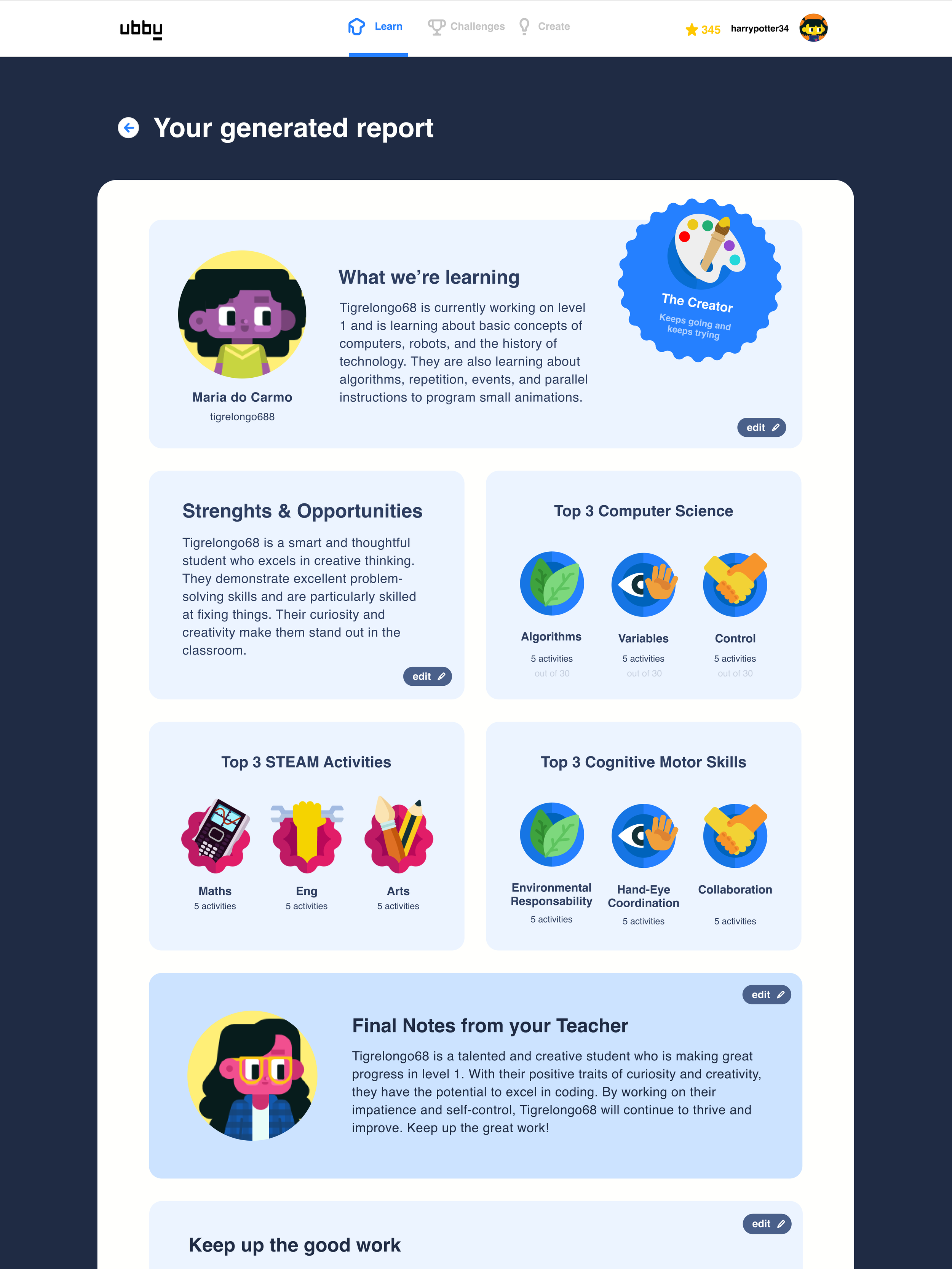
Every section of the generated report has an edit option. The teacher reads it, adjusts what doesn't sound like them, and sends it when they're ready. The AI writes the first draft. The teacher signs off on the final one.
What this is, and what it isn't
This is a tool that gives teachers time back without taking away the part that actually matters: knowing their students. The AI handles the blank page. The teacher handles everything that counts.